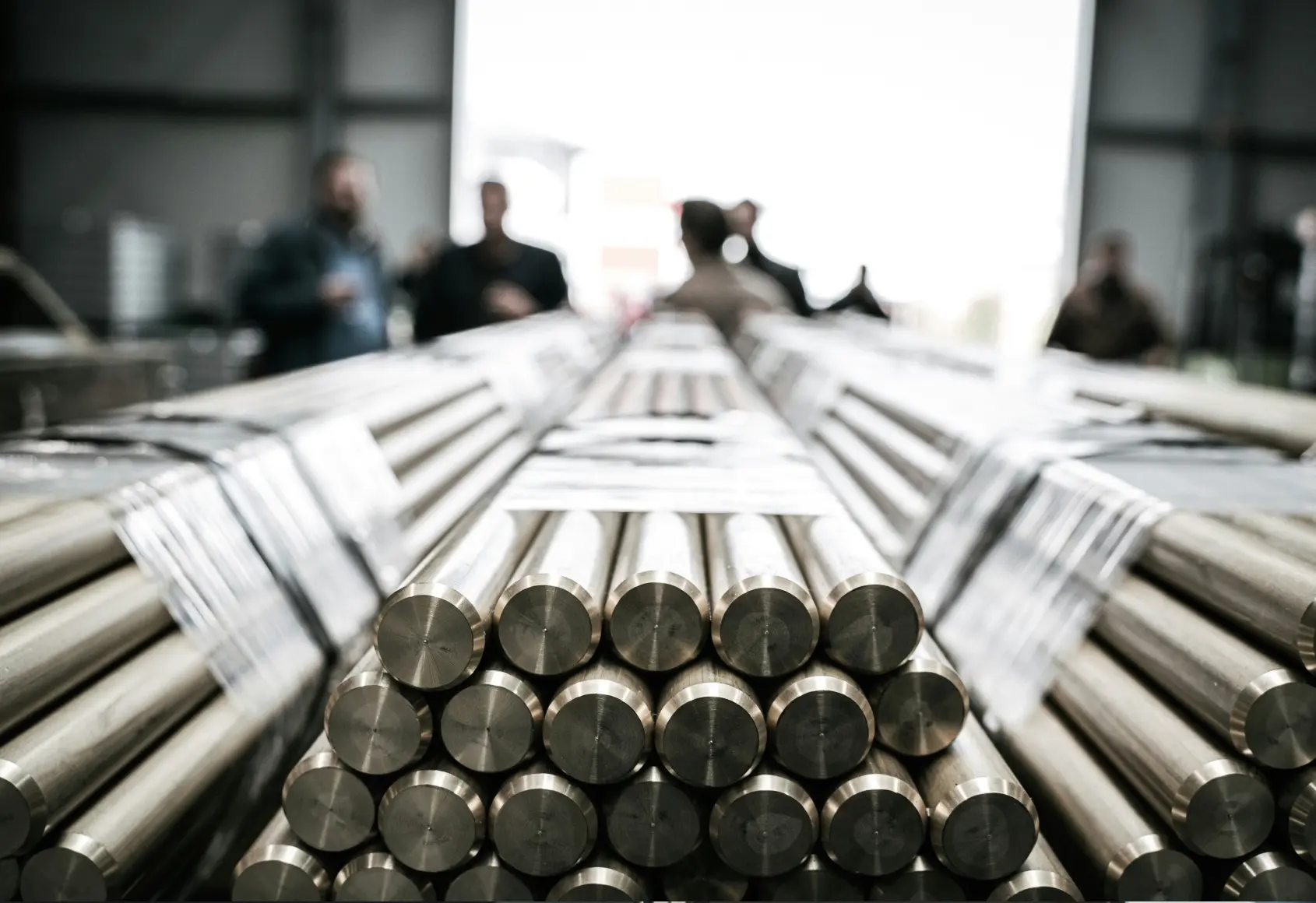


Gr.2® TR340C
Main Ingredients
Titanium (Ti)
Remaining
Nitrogen (N)
≤ 0.03
Carbon (C)
≤ 0.08
Hydrogen (H)
≤ 0.013
Iron (Fe)
≤ 0.20
Oxygen (O)
≤ 0.15
Product features





-
Product Origin
Japan (Kobe), United States (ATI), South Korea (POSCO), Baoti Group (China)
-
Compliance Standards
JIS H4600 TR340C, ASTM B265 GR.2, GB/T3621 TA2
-
Physical Properties
Density: 4.51 g/cm³
Grain Size: 3.0-7.0
-
Mechanical Properties
Tensile Strength: 340MPa ≤ σb ≤ 410MPa
Yield Strength: σb ≥ 165MPa
Elongation: δ ≥ 27%
-
Corrosion Resistance
Titanium exhibits excellent corrosion resistance in a wide range of media, particularly in neutral and oxidizing environments. It can also be used in some dilute reducing acids, such as nitric acid from room temperature up to its boiling point, making it suitable for applications involving highly corrosive oxidizing conditions. It has good corrosion resistance to most alkali solutions, such as saturated solutions of barium hydroxide, calcium hydroxide and magnesium hydroxide at room temperature; however, it is not suitable for use in boiling sodium hydroxide solutions. Titanium is also highly corrosion resistant in seawater, and shows resistance to most organic acids (except formic acid, oxalic acid). In addition to these environments, it has excellent corrosion resistance in wet chlorine gas and chloride solutions such as chlorite and hypochlorite. Moreover, its resistance in sodium chloride solutions improves with increasing pH, as alkaline conditions help stabilize the protective oxide layer on the titanium surface.
-
Applications
Aerospace, bellows compensators, seawater desalination, desulfurization and denitrification, chemical equipment, etc.
-
Matching Welding Materials
ERTi-2
-
Supply Formats
Plates, strips, bars, wires, forgings, rods, welding materials, flanges, etc. Custom processing according to drawings is available.
Our Partners













Get in Touch